
Checking Criminal History in Andrews County
No single Andrews County search contains every part of a criminal history. Begin with the office closest to the event. The Andrews County Sheriff's Office links to the official jail search and accepts open-records requests for sheriff reports. The District Clerk holds felony cases, while the County Clerk holds constitutional County Court misdemeanors. The City of Andrews keeps its own police reports and municipal matters. Texas DPS then supplies a statewide public name search.
Gather a full legal name, date of birth when lawfully available, likely event date, and spelling variants. A cause number, incident number, booking number, or DPS State Identification number sharply reduces false matches. Compare dates and courts before relying on a same-name result. For a certified judgment, contact the clerk. For a person's own complete Texas record review, follow the fingerprint route rather than assuming a public name result is a full rap sheet.
- Choose the source by event: police report, county booking, court case, or DPS history.
- Search with the most exact identifier available, then try name variants if needed.
- Match the date of birth, event date, court, and charge before selecting a record.
- Trace an arrest into the correct clerk's case file to find the filed charge and outcome.
- Request a certified copy or fingerprint personal review when the purpose requires an official source.
Four Andrews Criminal Record Custodians
Andrews County criminal records are legally split even though most counters sit in the county seat. The courthouse at 201 North Main Street houses the District Clerk in Room 102 and the felony court in Room 201. County Clerk Vicki Scott works from 215 NW 1st Street, Suite 121-A, where misdemeanor records are kept. The sheriff and jail operate at 790 SE 401. City reports remain with the Andrews Police Department.
District Clerk
201 N. Main St., Room 102
Andrews, TX 79714
432-524-1417
Felony case files
County Clerk
215 NW 1st St., Suite 121-A
Andrews, TX 79714
432-524-1426
Weekdays, 8 a.m. to 4 p.m.
Sheriff and Jail
790 SE 401
Andrews, TX 79714
432-523-5545
Booking and sheriff records
The official Andrews County directory shows how these offices fit within county government.

The county landing page is a routing point, not a combined criminal-record database.
Texas Official Background Checks
The Texas Department of Public Safety Crime Records Division maintains the Computerized Criminal History repository. Its public Criminal History Name Search generally returns convictions and deferred adjudications made public by Texas law, plus linked arrests when DPS has received a disposition. Each search credit costs $3, and card or eCheck convenience fees may apply. Both account and non-account routes exist.
A name check is not the same as a fingerprint review. DPS Fingerprint Applicant Services of Texas uses IdentoGO by IDEMIA for authorized fingerprint capture. A person reviewing their own Texas history follows the DPS personal-review process. Authorized requests use a service code from the requesting entity before scheduling. The official IdentoGO scheduler illustrates that appointment path.
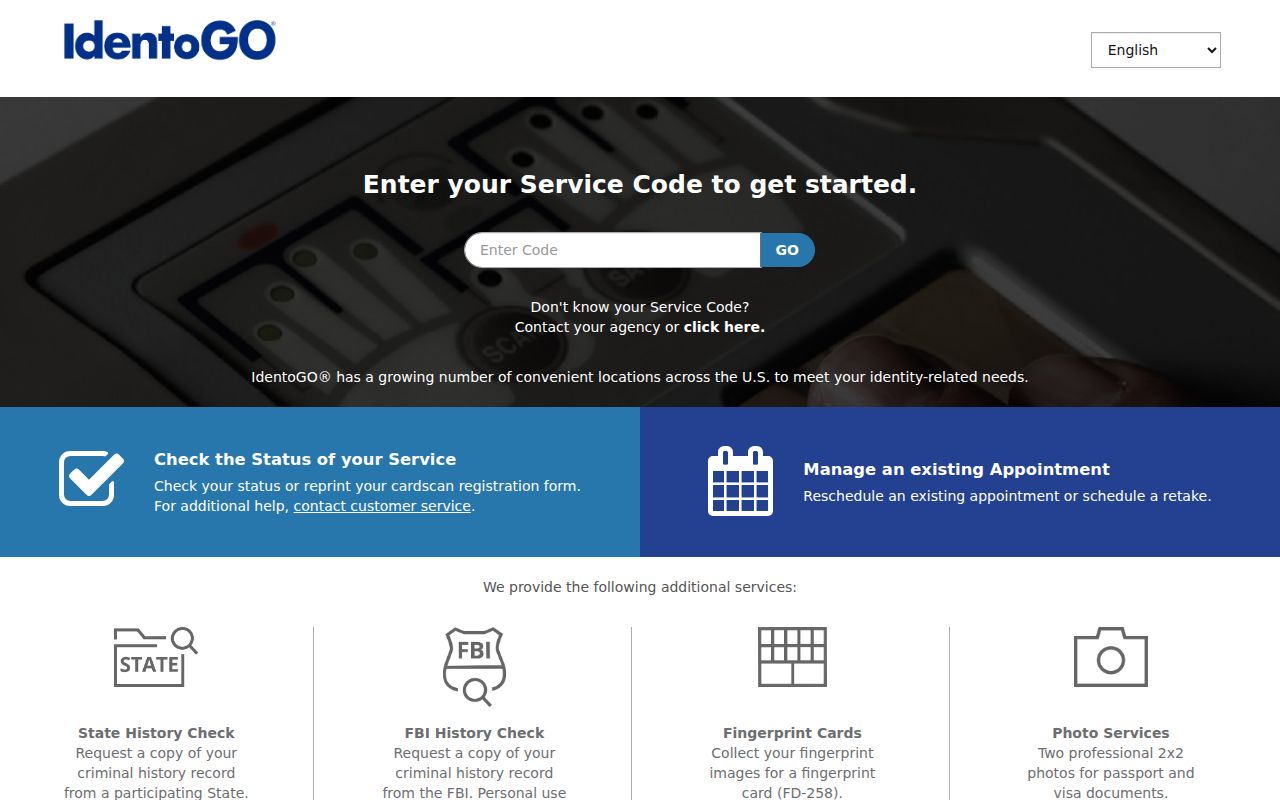
The enrollment page is for fingerprint capture; it does not replace a clerk's certified Andrews County court record.
DPS Name Search or Fingerprints
The right channel depends on the record sought. The public DPS product is useful for public Texas conviction and deferred-adjudication information. Fingerprints are stronger for matching a person to their own repository record. A court file is stronger for the filed pleadings, docket, judgment, and certified disposition in Andrews County.
| Channel | Best use | Key input | Limit |
|---|---|---|---|
| DPS public name search | Public statewide result | Name, date of birth, sex | Not a complete rap sheet |
| DPS personal review | Reviewing your own Texas record | Fingerprints and identity data | Subject-only process |
| Andrews clerk request | Case documents and certification | Name or cause number | Split by felony and misdemeanor court |
The DPS Crime Records gateway is the source for repository services and access rules.
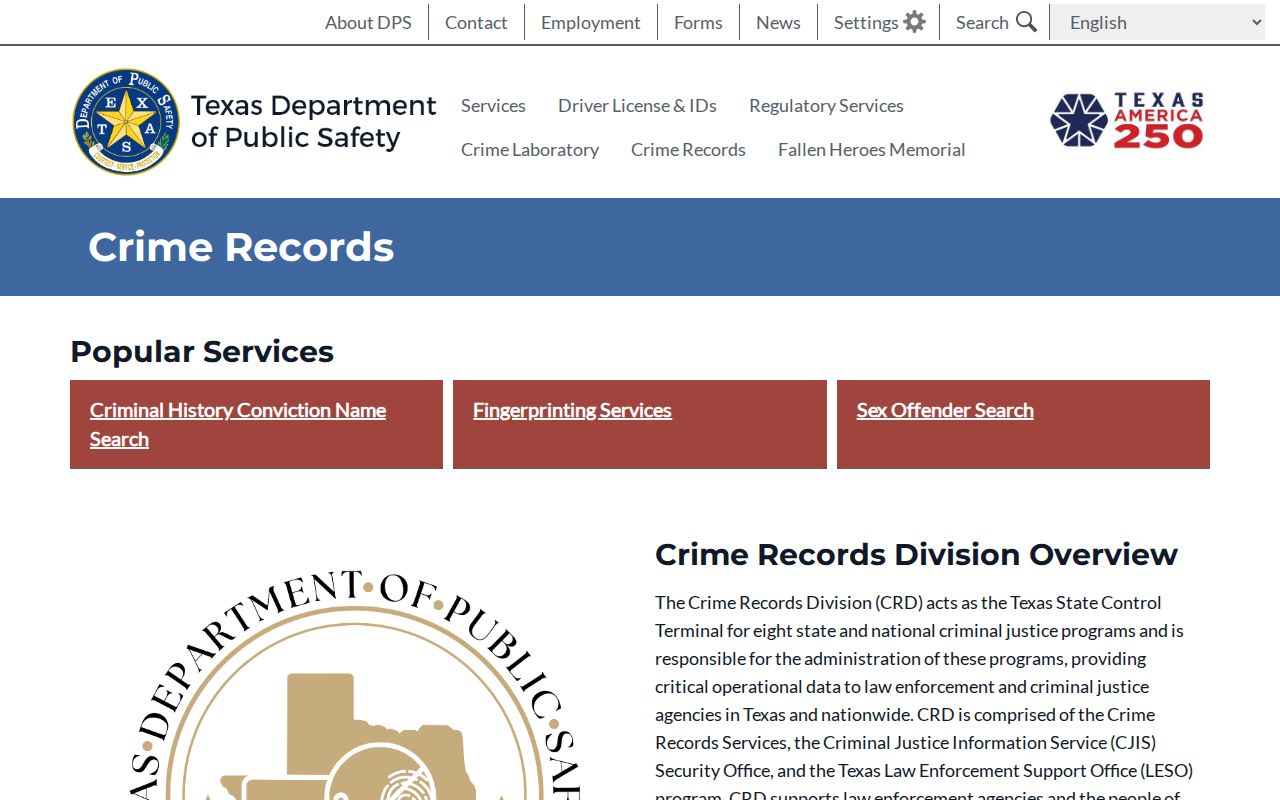
Use its product descriptions to distinguish public name results from fingerprint-based access.
Criminal Record Types
A criminal history is a chain of related records, not one document. Andrews police or the sheriff creates the incident and arrest report. The jail creates booking details and custody entries. A prosecutor's filed charge becomes part of a clerk's court file. DPS receives fingerprint-supported arrest data and later dispositions. TDCJ maintains state custody and parole information, while DPS runs the Texas Public Sex Offender Registry.
These sources answer different questions. A booking says someone entered custody. A docket shows what prosecutors filed. A judgment states the court's outcome. A warrant record shows an order to arrest, not a conviction. Supervision and registry entries arise only under their own legal rules.
- Arrest and booking records: agency and jail files tied to an arrest event.
- Criminal court files: complaints, indictments, motions, dockets, judgments, and sentences.
- DPS history entries: public repository data governed by Chapter 411.
- Warrants: court orders that must be verified with the issuing office.
- Custody and supervision: jail, TDCJ, probation, parole, and registry status records.
Andrews Jail and State Custody
The sheriff's official page links to Search Jail Records and VINE. The county link is safer to bookmark than a vendor address because contracts and routes can change. No separate official daily arrest blotter was verified. If the roster does not resolve a recent booking, call the jail, send an open-records request, check the arresting agency, and then search the clerk once a charge is filed.
State prison records are separate. The free TDCJ Online Inmate Search covers people in TDCJ custody, not the Andrews County Jail.
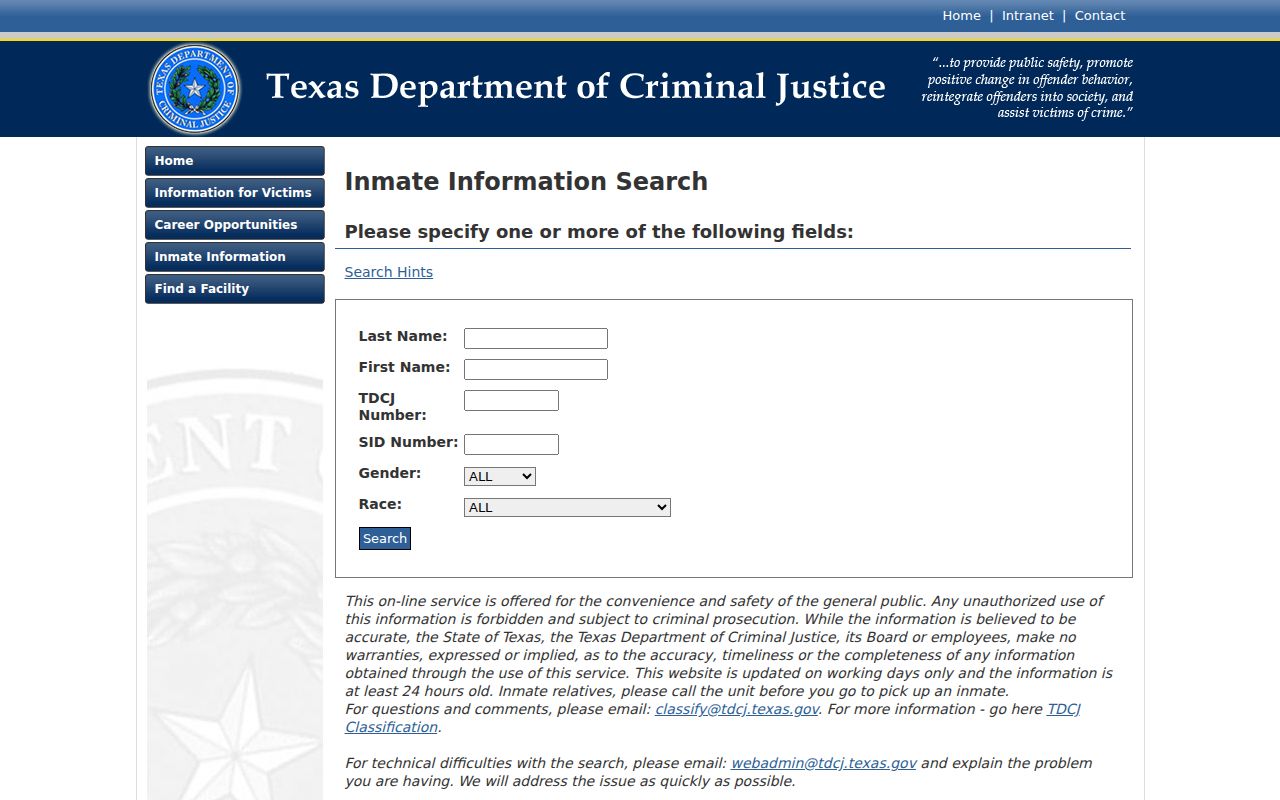
Searchers can use a TDCJ or State Identification number, or combine a name with other lawful identifiers to reduce false matches.
Inside an Andrews County Criminal Record
Fields vary by custodian. DPS data may connect an arrest cycle to a reported disposition, but the clerk's file carries the court record. Booking data may show an initial charge that prosecutors later revise. Compare the source, date, identifier, and status before deciding two entries describe the same event.
| Name and Identifiers | Legal name, aliases, birth data, and agency or state identifiers when public. |
|---|---|
| Arrest and Booking | Agency, date, booking number, initial charge, bond, and custody status. |
| Charges and Statutes | Filed offense, level, statute citation, and amendments shown by the court. |
| Disposition | Pending, dismissed, acquitted, convicted, or deferred adjudication outcome. |
| Sentence | Jail or prison term, fine, community supervision, and court conditions. |
| Supervision Status | Probation, parole, release, and custody information held by the proper agency. |
Missing Andrews County Dispositions
A fresh arrest can appear before any court case is filed. A later judgment can also be absent from a DPS name result if the disposition was delayed, identifiers did not match, or the record is restricted. Start with the clerk that entered the judgment. Ask for the docket and certified disposition, then use the DPS record-review and correction procedure if your own repository history remains wrong.
- Dismissed
- The filed charge ended without a conviction on that count.
- Deferred adjudication
- The court deferred a finding while conditions were completed; public access depends on Texas law.
- No-bill
- A grand jury did not return an indictment on the submitted charge.
- Acquitted
- The fact finder returned a not-guilty result.
Do not infer the outcome from an arrest label. The judgment is the controlling court source.
Public Access Laws in Texas
The Texas Public Information Act presumes access to government records but preserves specific exceptions and confidential fields. A sheriff request should name the event, date, place, people, report or booking number, items sought, and preferred format. Texas Government Code section 552.221 requires prompt production. The ten-business-day rule generally concerns an agency request for an Attorney General ruling under section 552.301, not a universal deadline to finish every request.
Key Texas laws:
Government Code Chapter 552 sets public-information procedures and exceptions.
Government Code Chapter 411 governs DPS criminal-history access and nondisclosure.
Code of Criminal Procedure Chapter 55A governs expunction.
Code of Criminal Procedure Chapter 62 governs sex offender registration.
Andrews County Warrant Checks
No verified public countywide web warrant search was found. Check the sheriff's official channels, call 432-523-5545, and ask the court that may have issued the warrant. City municipal warrants stay with Municipal Court, while felony and county misdemeanor warrants follow their own courts. A public-information request can seek warrant information, but restricted or active-investigation material may be withheld.
The County Clerk's payment page carries an important warning: contact the clerk before using Certified Payments. Payment does not recall a warrant until it is approved and processed. Anyone resolving their own warrant should verify status with the issuing court and seek legal advice when needed rather than relying on a receipt or third-party claim.
Note: An arrest warrant is a court order to take someone into custody, not proof that the charged conduct occurred.
Sealed, Expunged, and Restricted Records
Texas uses two distinct remedies. Expunction under Code of Criminal Procedure Chapter 55A can require eligible agencies to destroy or return covered records. An order of nondisclosure under Government Code Chapter 411, Subchapter E-1 generally limits public disclosure while permitting access by listed criminal-justice and other authorized entities. Eligibility depends on the charge, outcome, prior history, waiting periods, and statute.
Juvenile material, protected victim data, medical information, driver-license data, active investigative details, and records subject to a valid expunction or nondisclosure order may be closed or redacted. The current Chapter 55A text reflects the reorganization effective January 1, 2025.
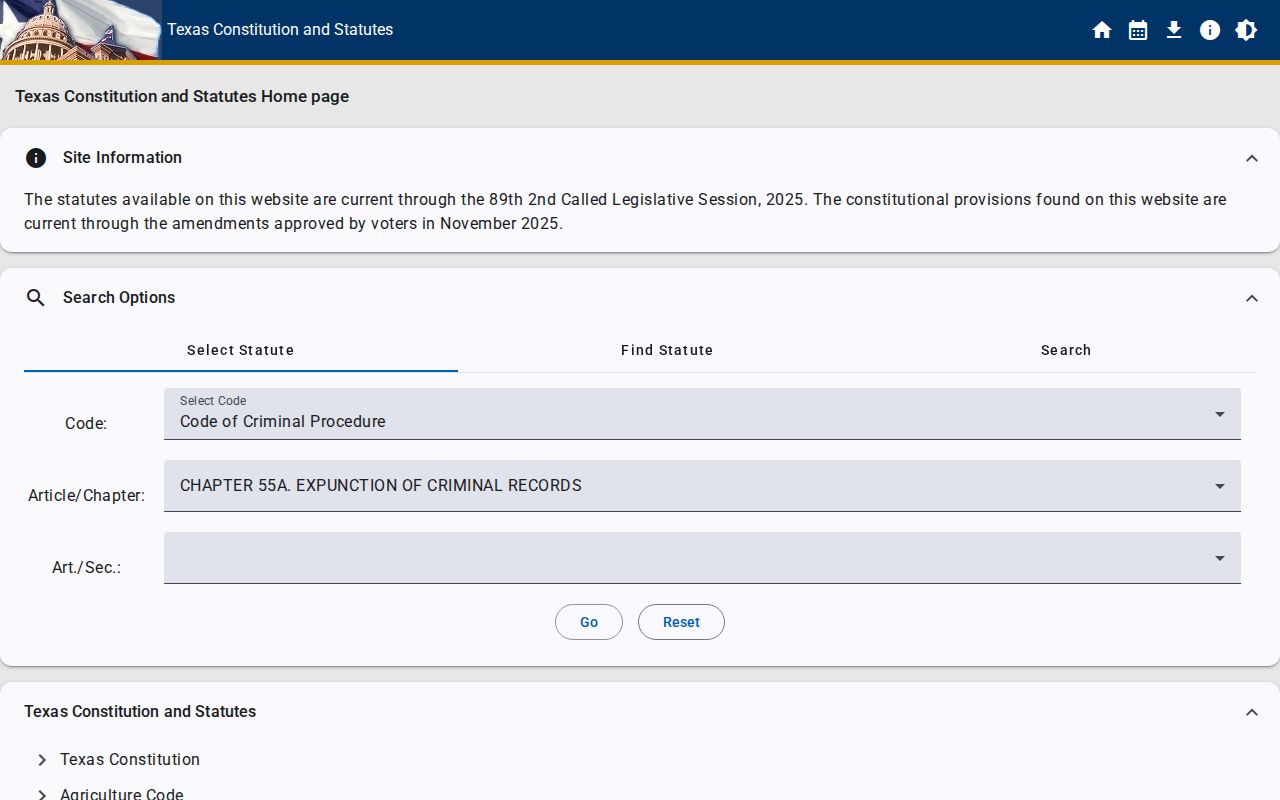
The statute is the current starting point; the clerk cannot decide eligibility or give legal advice.
Andrews County Parole Connection
Probation and parole are not the same. Andrews County Adult Probation, also called the Community Supervision and Corrections Department, handles court-ordered community supervision. The Texas Board of Pardons and Paroles makes state release decisions, while the TDCJ Parole Division supervises releasees. Andrews County is assigned to the Monahans District Parole Office in Region V.
The TDCJ county assignment directory confirms that routing.
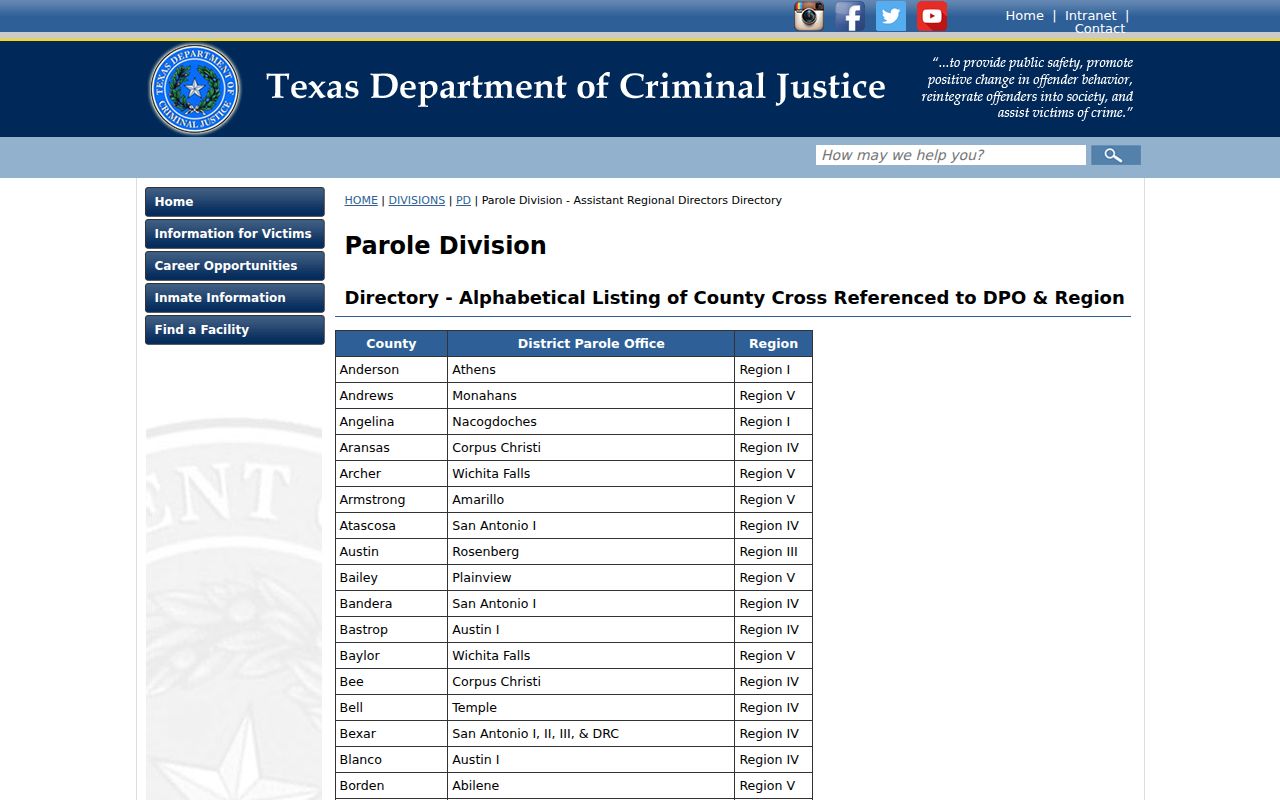
Office assignment helps route a supervision question, but it does not replace the sentencing court's judgment.
The Texas Board of Pardons and Paroles publishes the release authority's official information.
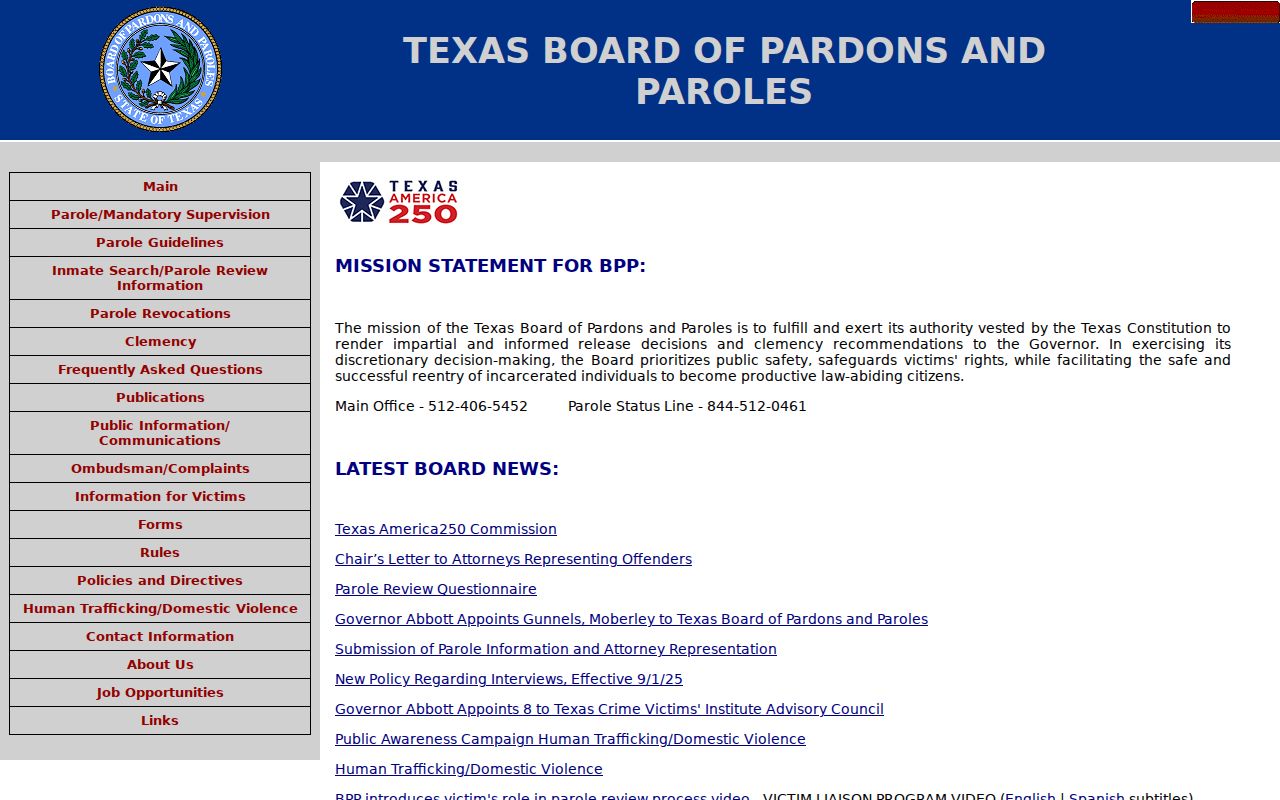
Release decisions and day-to-day parole supervision come from different parts of the state system.
Andrews Custody Status Notifications
TDCJ's Integrated Victim Services System provides offender status search and confidential notifications. It serves a different purpose from the county jail roster and the public criminal-history search. Use VINE for linked county custody updates and IVSS for applicable state status information. Neither service establishes guilt or supplies a certified judgment.
The official IVSS portal explains search and notification access.
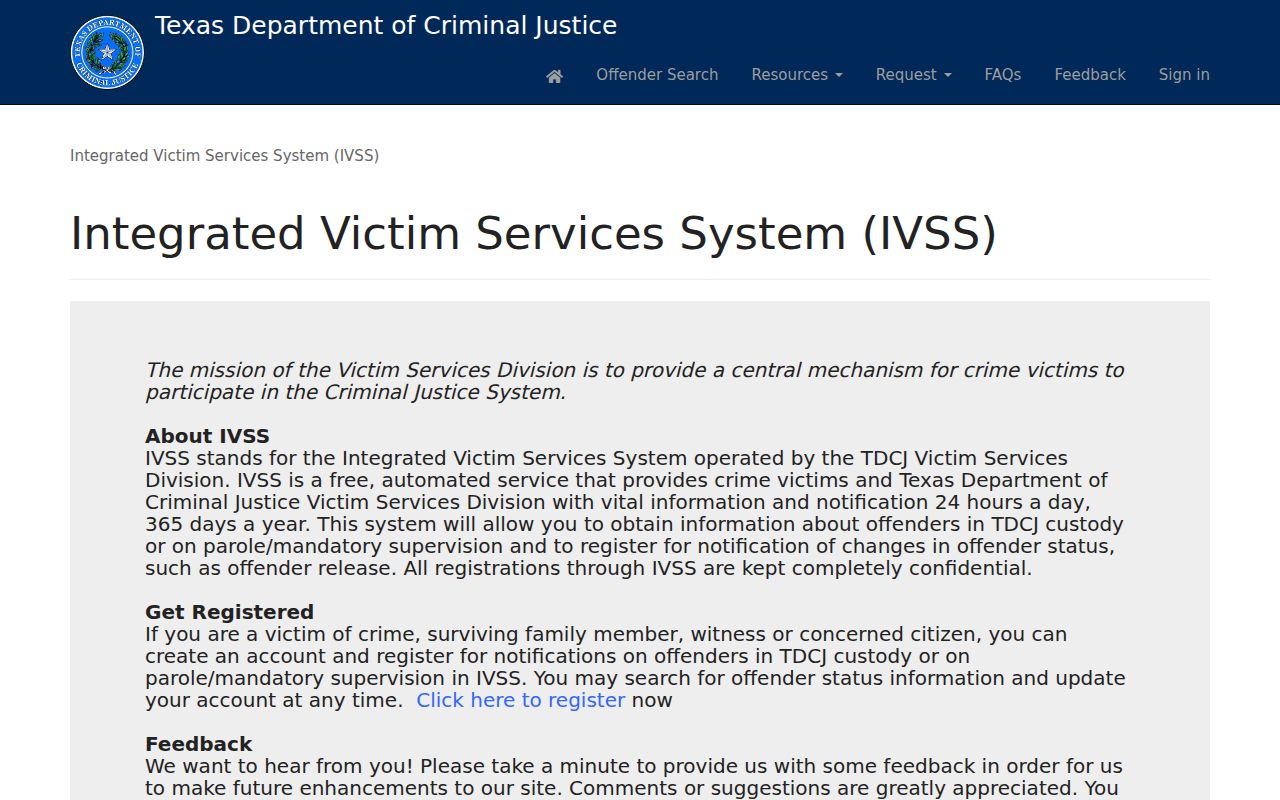
Users need an account for confidential notification features, while general search functions remain distinct.
Federal Records Beyond Andrews County
A local search can miss a federal matter because federal criminal cases do not enter Andrews County clerk files. Andrews County lies within the U.S. District Court for the Western District of Texas. PACER is the federal judiciary's account-based case service, and the district court supplies its own rules, calendars, and clerk information. A PACER docket may identify charges, filings, orders, judgment, and sentence. It does not serve as a county booking log or a Texas DPS criminal-history report.
Federal custody also has its own source. The Federal Bureau of Prisons Inmate Locator covers people held in the federal prison system, while the Andrews County jail search covers local custody and the TDCJ locator covers Texas prison custody. Dates matter because older federal results may reflect release rather than a current location. If an event began with a local arrest but moved to federal court, compare the arresting agency report with the federal docket instead of expecting an Andrews clerk to hold the federal judgment.
A person seeking their own national Identity History Summary follows the FBI subject-review process. That product differs from both PACER and the DPS public name search. Each source has a narrow job: PACER documents a federal case, the Bureau of Prisons reports federal custody, and an identity-history review reports fingerprint-linked information through the authorized process. Keeping those functions apart prevents a blank Andrews County search from being mistaken for proof that no federal record exists.
Andrews County Criminal Records by City
Andrews is the county's only incorporated city, so one city guide is correct. Andrews Police Department reports begin with the city's open-records channel. Bookings normally move to the county jail, and filed cases move to Municipal Court, County Court, or District Court based on jurisdiction. The city guide keeps those local routes distinct.
Andrews Criminal Records
13,665 estimated residents in 2025 · city police and Municipal Court routes
Reading Andrews Criminal Case Counts
Texas judicial statistics describe court work, not a count of crimes or unique defendants. Andrews justice courts reported 2,630 new criminal cases, 463 added or other cases, 2,126 dispositions, and 1,851 pending at the end of the 2025 reporting year. Traffic and fine-only work can dominate those dockets. One person can also generate more than one filing.
The district age report divided its 212 pending criminal cases into age buckets: 34 percent at 90 days or less, 24 percent at 91 to 180 days, 25 percent at 181 to 365 days, and 17 percent over 365 days. These figures measure workload at a reporting point. They are not conviction rates and should not be used as a substitute for an individual's case file.
For historical work, the Andrews County Archive Center can bridge some gaps left by modern portals. County permanent holdings date to 1881, although some categories are closed. The archive includes court schedules, dockets, fee schedules, and standing felony bond conditions. Its materials add context, but a certified judgment still comes from the clerk who holds the case.