
Sex Offender Checks in Andrews County
The Texas Public Sex Offender Registry is the main public search for Andrews County. Texas DPS manages that system. It supports both name and place-based searches, so the best starting path depends on the question. Select Andrews County for a broad local review. Use an address and radius when the concern is tied to one place. A name search works best when enough identity details are known to separate people who share a surname.
The registry is one part of the Andrews County access chain. The Andrews County Sheriff serves as the local contact for people whose registration duty lies in Andrews County. The office can answer questions about where and how a registrant reports, but its records counter is not a substitute for the public DPS interface. For releasable material outside the online profile, use the sheriff's official open-records route. Call first when the right channel is not clear.
The DPS registry search screen shows how Texas separates name and geographic lookup routes.
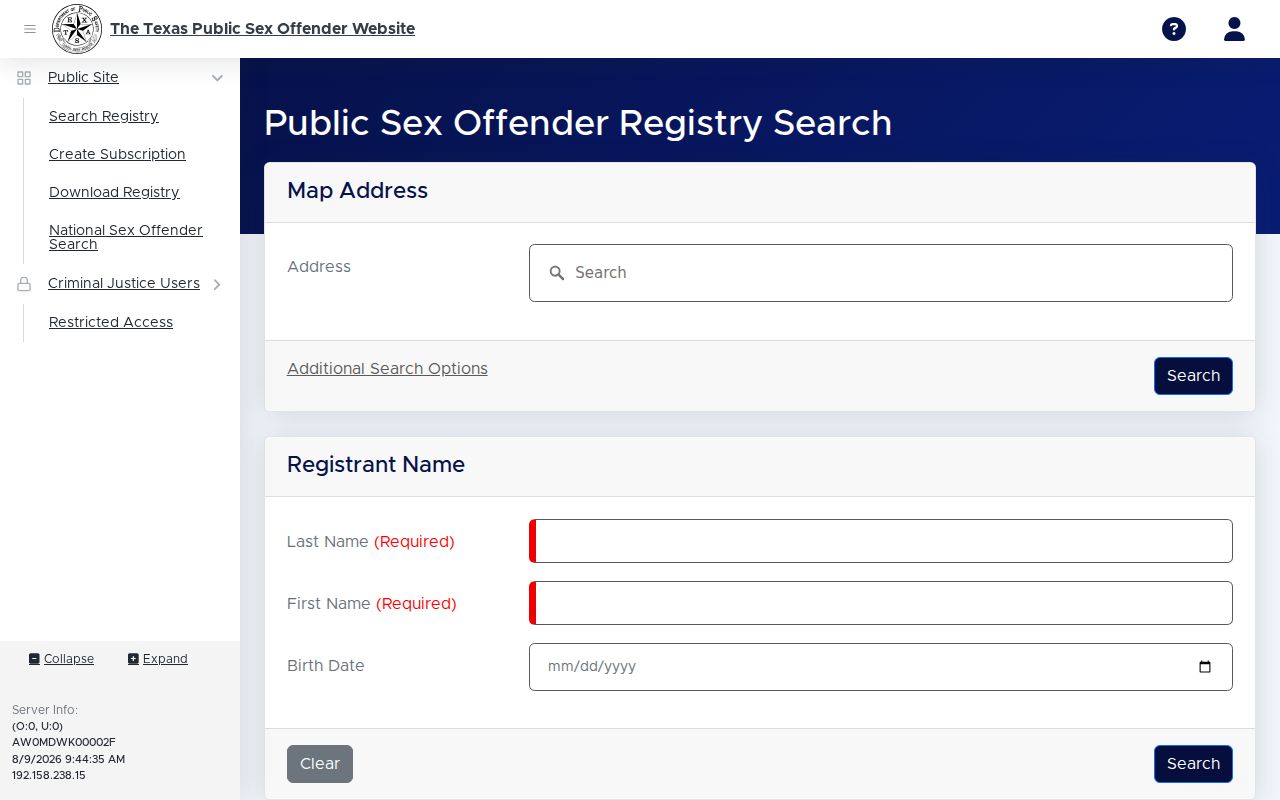
That search form is the official starting point for an Andrews County registry search, while the sheriff remains the local reporting contact.
Andrews County Registry Help
The Andrews County Sheriff's Office is at 790 SE 401, Andrews, Texas 79714, and its main number is 432-523-5545. A person who must register should call for the current registration location, appointment steps, and reporting instructions. The county page does not publish a distinct sex offender unit schedule. That makes a call more reliable than arriving during assumed counter hours.
Public users should also call the sheriff when they have a local compliance concern that cannot be resolved by reading the DPS profile. Give precise facts, such as the address shown, the observed issue, and the reason the entry may be stale. Do not confront the person shown. Use 911 only for an immediate threat. A routine question about a profile, registration visit, or suspected failure to report belongs with the sheriff or DPS through their normal channels.
The sheriff also links an Open Records Request process. It can be used for releasable Andrews County records outside the registry. A useful request names the record type, person or incident identifiers, date range, location, and desired format. Texas law permits redaction or withholding where another law protects the material, so an open-records response may not duplicate every field in a DPS profile.
How to Search the Texas Public Sex Offender Registry
Choose the narrowest search method that still answers the question. A countywide scan and a distance search are not the same. The former gathers entries tied to Andrews County. The latter tests proximity to a stated address within the portal's offered radius. Search results can change as registrants report new facts, so record the access date and open the full profile before drawing a conclusion.
- Open the DPS registry, read the conditions of use, and complete any notice or CAPTCHA shown.
- Select a name route or enter an address, city, county, ZIP Code, and radius as the live form allows.
- Review the results and compare the listed identity details instead of relying on a name or map pin alone.
- Open the full profile, check status and verification details, and report a suspected error through an official channel.
The field labels below reflect the official Texas search described in the Andrews County research.
| Field or function | Type | Required | Use |
|---|---|---|---|
| Last Name | Text | Name route | Starts a surname search |
| First or Middle Name | Text | No | Narrows common names and aliases |
| Address | Text | Address route | Sets the point for a geographic search |
| City, County, or ZIP | Text or select | No | Use Andrews or Andrews County for local results |
| Radius | Select | With address route | Use only options shown on the live form |
| Search or Clear | Button | Search is required | Runs or resets the query |
Andrews County Registry or NSOPW
The DPS registry and the National Sex Offender Public Website answer related but distinct questions. DPS is the primary source for Texas registration records and offers the state profile details. NSOPW searches participating jurisdictions across state and territorial lines, then presents or routes the public information supplied by those jurisdictions. It is useful when a name or safety concern may cross a border.
For an Andrews County question, start with Texas DPS. Add NSOPW when the person may have lived elsewhere, the name search needs a wider reach, or nearby results could cross a state line. A missing national result does not prove that no record exists. Spelling, aliases, jurisdiction feeds, search rules, and status changes can affect results. Return to the state registry and sheriff when the question is local.
The Department of Justice national search provides the cross-state layer available to Andrews County residents.
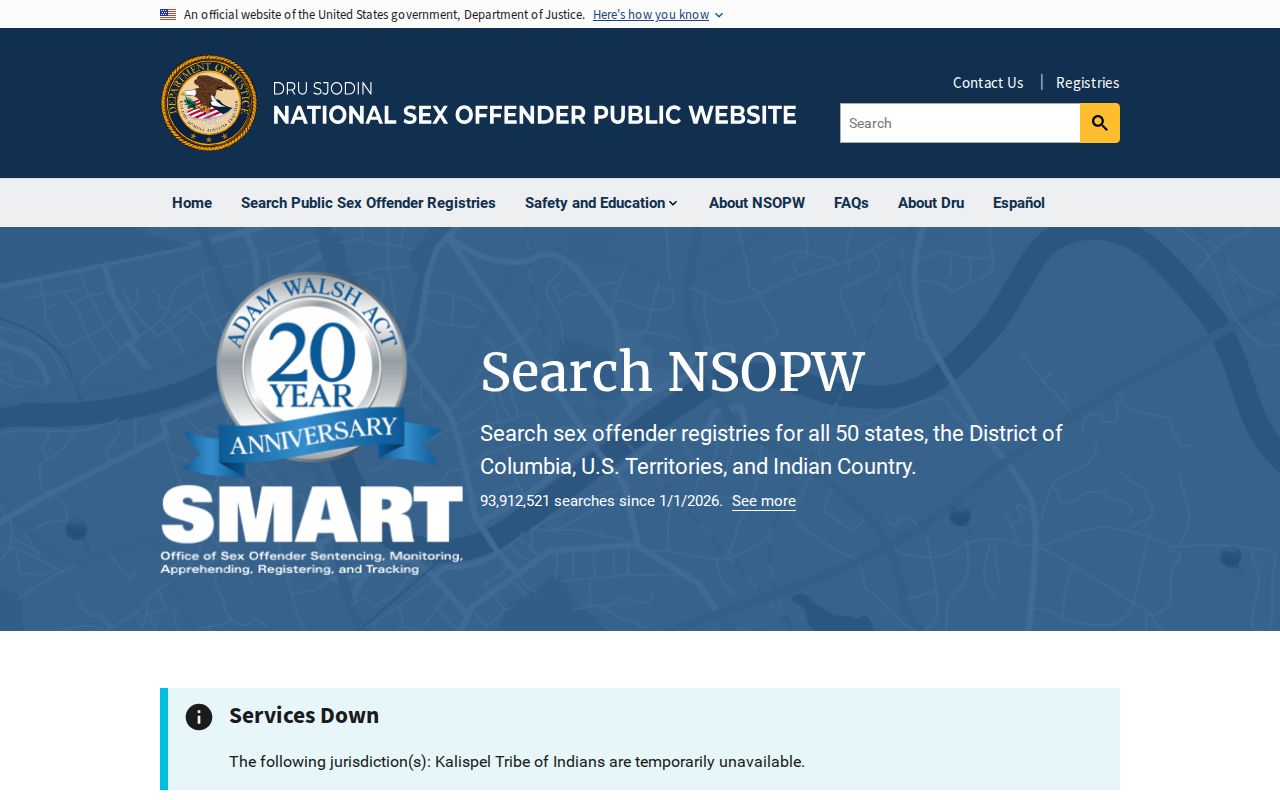
NSOPW broadens the search area, but Texas DPS remains the source to inspect closely for a Texas registry profile.
Inside a Registry Profile
A public Texas registry profile is an identity and duty record, not a full court docket. Read it field by field. Compare aliases and physical traits before deciding that a result matches the intended person. Then review the registered address, status, registering agency, offense facts, and verification data. Some fields may be absent because not every profile collects or publicly displays the same set.
The Texas registry profile interface frames the public fields without making a private person the focus.
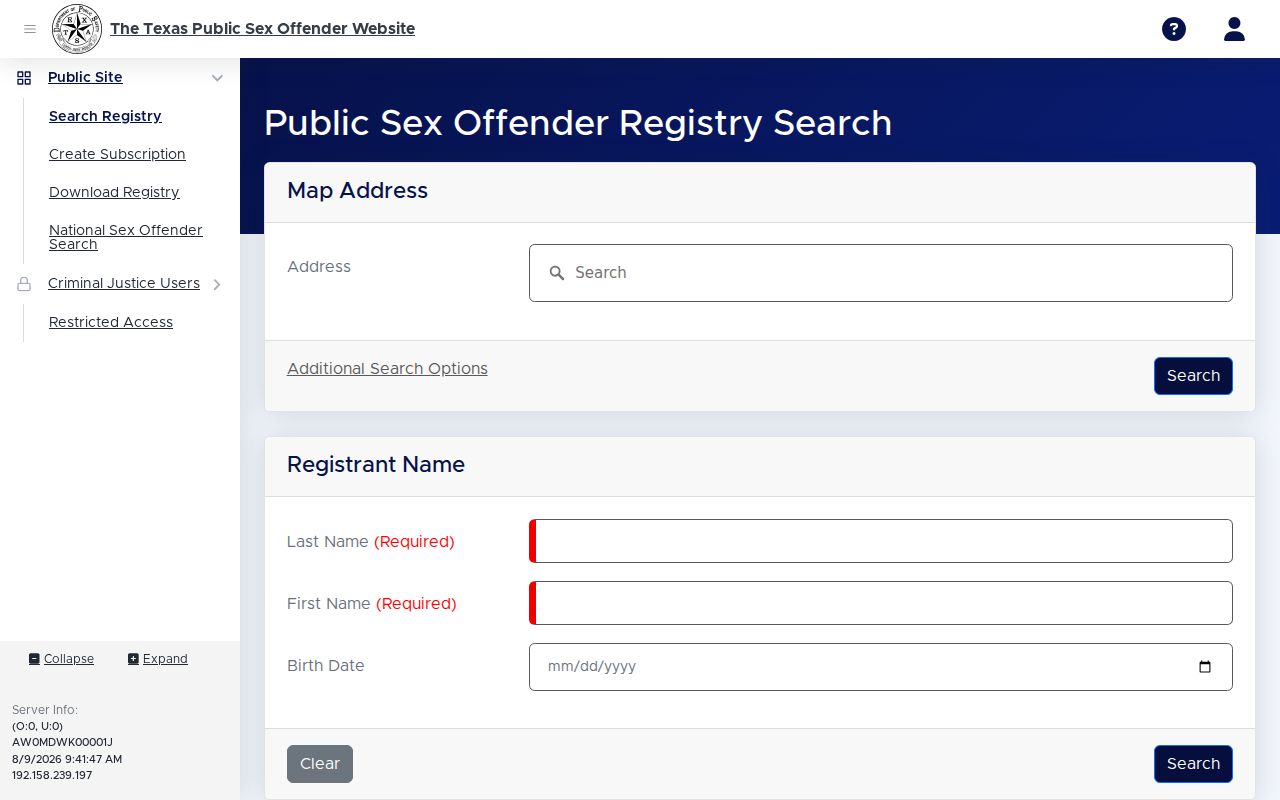
The layout helps an Andrews County searcher move past the result pin and verify the profile's identity, offense, agency, and status fields.
| Name and aliases | Registration name plus other reported names where public |
|---|---|
| Photo and description | Photo, sex, race, age or birth data, height, weight, eyes, hair, and identifying marks where shown |
| Registered address | The public address entry reported through the registration system |
| Offense details | Offense description or statute, conviction date, and jurisdiction where public |
| Status and agency | Registration or verification data and the registering agency |
| Other public data | Victim age or sex category, vehicle, or institutional facts when collected and displayed |
Note: A blank field does not prove that the fact does not exist in a protected agency or court record.
When an Andrews County Map Pin Looks Wrong
A registry map is a search aid. It is not the whole record. When a pin seems misplaced or an address looks old, open the profile and check its status, registering agency, and last verified information. Confirm that the profile matches the person intended. Street formatting and map placement can also cause a marker to appear near, but not exactly on, the listed address.
Next, rerun the search by name and by Andrews County. This tests whether the issue comes from the map route or the underlying profile. Save the public facts needed to describe the concern, but do not repost the person's data or begin an in-person inquiry. Contact the Andrews County Sheriff's Office at 432-523-5545 or DPS. State what appears inconsistent and allow law enforcement to check compliance.
If the concern involves a move from another state, check NSOPW and the other state's official registry too. A registrant's reporting duty, move date, and active status require agency review. Public users should not infer a crime from a delayed pin or attempt to enforce Chapter 62 on their own.
Texas Registration Levels and Requirements
Texas does not reduce every registry duty to a public low, medium, or high tier. Code of Criminal Procedure Chapter 62 ties duration and reporting duties to the reportable conviction or adjudication, the offense, the case date, release or discharge, supervision, and other statutory facts. Article 62.101 generally supplies lifetime registration for listed offenses or a post-release or post-discharge term, commonly ten years, for other covered matters.
The official Chapter 62 text is the source for duration, verification, and change-reporting duties.
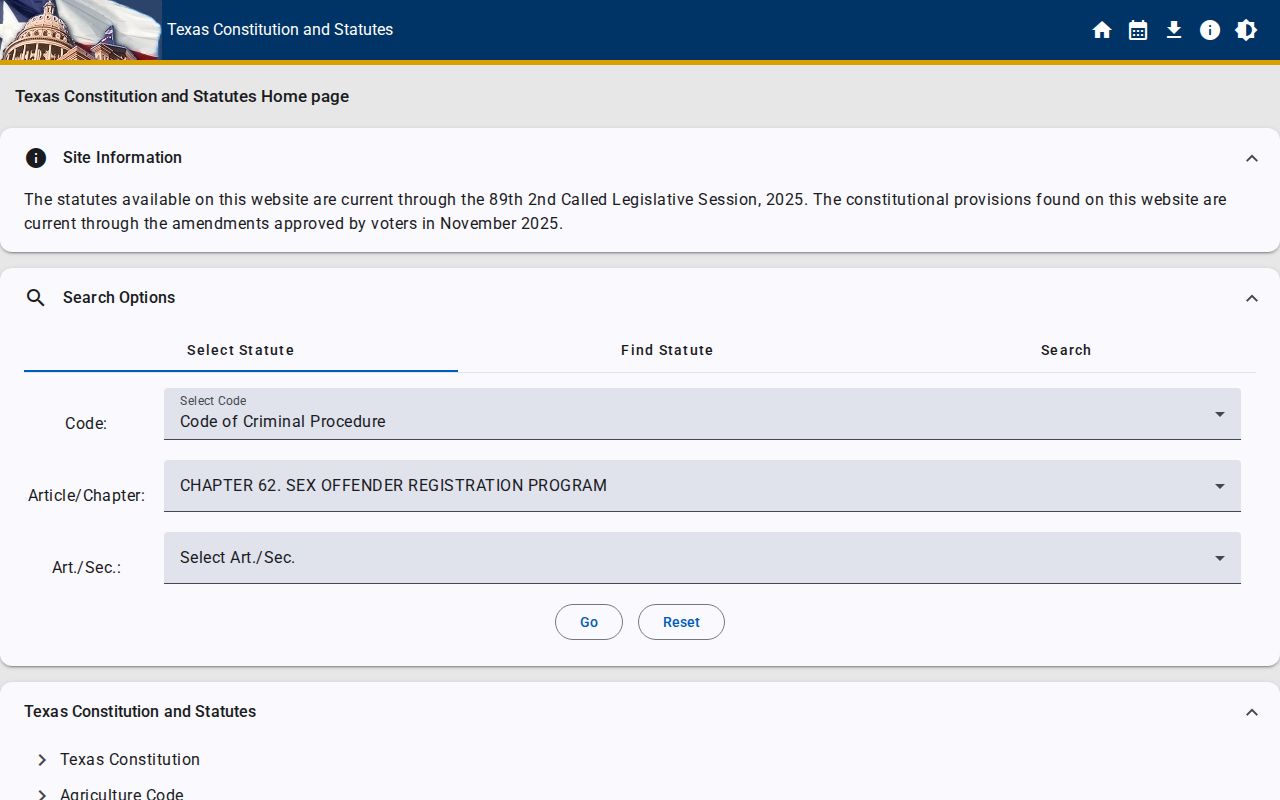
That statute shows why an Andrews County profile cannot be assigned a homemade three-tier label or a term based only on conviction date.
| Texas category | General duration | Visibility and verification note |
|---|---|---|
| Offenses listed for life | Lifetime | Frequency depends on the controlling statute and status |
| Other covered convictions or adjudications | Generally ten years after the statutory release, discharge, or supervision endpoint | Do not count from conviction alone |
| Civil commitment or other high-frequency categories | Lifetime or the controlling statutory term | Some persons report much more often |
| Juvenile or exemption situations | Special Chapter 62 rules | Adult public treatment should not be assumed |
Andrews County Residence Rule Checks
Texas has no single statewide law that imposes one universal residence-distance limit on every registrant. A broad claim that all registered people must live a fixed distance from every school, park, or child-care site is therefore incomplete. Parole terms, community-supervision conditions, and a valid local rule can create limits for a specific person. The correct source depends on the person's legal status.
For someone on parole or mandatory supervision, the Texas Department of Criminal Justice Parole Division controls supervision conditions. Andrews County falls under the Monahans District Parole Office in Region V. Local community supervision is handled by Andrews County Adult Probation or CSCD, while the sentencing judgment remains with the proper court clerk. Detailed supervision files are not the same as a public registry profile.
Verify a claimed restriction with the supervising authority and current city or county law. A map circle on the DPS site measures search distance; it does not establish that a home violates a legal buffer. This distinction matters for sound safety planning and fair use of Andrews County registry records.
Andrews County Registry Duration
The phrase “ten years or life” is only a starting point. Article 62.101 lists the controlling framework, but the end date may depend on release, discharge, or the close of supervision rather than the date of conviction. Initial registration and address changes have separate duties under Articles 62.051 and 62.055. Article 62.058 governs verification frequency, including more frequent reporting for some persons.
An Andrews County public profile may show facts that help explain the duty, yet a user should not calculate a final removal date from a few visible fields. Juvenile adjudications, an offense from another jurisdiction, a civil commitment, or an exemption issue can invoke different parts of Chapter 62. The sheriff can give local reporting instructions. A lawyer or the responsible agency must resolve a disputed legal duty.
Profile visibility is also not a simple synonym for risk. It reflects Texas disclosure law and the data that DPS is allowed to publish. Read the offense and status fields in context. When the purpose is to understand the underlying judgment, use the court record rather than treating the registry as a complete case history.
Community Notification and Lawful Use
Registry information supports personal, family, and neighborhood awareness. It can help a resident identify an official record, review reported location data, and choose sound safety steps. It does not grant police power. Suspected noncompliance should go to the Andrews County Sheriff or DPS, and an urgent threat should go to 911. Avoid contact, public accusations, or attempts to test whether a person follows a registration term.
Texas DPS warnings and Chapter 62 set the legal context. A public entry may change after an Andrews County registrant reports a move or after an agency verifies new facts. Confirm the date and status shown. For records outside the public profile, use the sheriff's open-records channel and expect lawful redactions for protected data.
Registry misuse is unlawful: Texas Code of Criminal Procedure Chapter 62 warns that registry information must not be used to harass, threaten, or intimidate. Misuse can bring criminal or civil consequences.
Community awareness works best when it rests on current official facts. Search the Texas registry, use NSOPW when the question crosses state lines, and ask the proper agency to check a suspected error. That approach protects safety without turning an Andrews County registry result into a claim the public record does not support.